

Whatever you draw? Yeah, it's gonna mess with you later
Looks simple enough when you start out
Draw a line. Reach the exit. Solve the puzzle.
Then the line appears again.
Exactly where you drew it before.
In Echo Lines, every action leaves behind an echo that repeats seconds later. The paths you create don't disappear — they become part of the level itself.
A line that helped you before might block your movement later. A mistake can return when you least expect it. And sometimes the only way forward... is to work together with your own past actions.
Play Now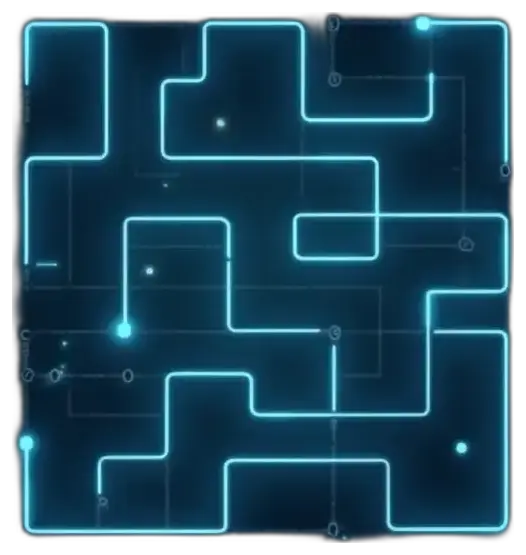
Your Past Moves Stick Around (Whether You Want Them To or Not)
So here's the thing — whatever line you draw, it's gonna show up again. After a short delay, your earlier movement repeats automatically inside the puzzle environment.
Which basically means you're screwing yourself over twice with every move:
At first, echoes feel helpful.
Then it all goes to hell. The puzzles ramp up and before you know it, your old moves are crashing into each other like some kind of time-travel traffic jam.
The level slowly fills with the memory of what you already did.
You Are Constantly Solving Alongside Yourself
The puzzles in Echo Lines aren't about speed. They're about timing, planning, and understanding how your actions repeat over time.
You'll learn to:
draw paths that future echoes can follow
activate multiple systems using delayed movement
avoid collisions with previous lines
create chain reactions between different echoes
build temporary solutions that evolve as echoes return
Things get trickier as you go. Simple ideas become layered systems.
And every solved puzzle feels like understanding a hidden pattern.
Simple Graphics, Complex Puzzles
I kept the graphics pretty minimal — didn't want fancy visuals getting in the way of the brain-bending stuff.
Minimal environments allow players to focus on:
The world evolves through:
Nothing feels random. Every result comes directly from something you created earlier.

The Hardest Puzzle Is Managing Your Own History
As levels become larger, echoes begin stacking together. Old paths return while new ones are being drawn. Multiple actions overlap across the same space. What once solved the puzzle may suddenly become the obstacle preventing progress.
You stop thinking about single moves. You start thinking in layers of time.
That's when Echo Lines becomes something more than a puzzle game.
"It's like having a fight with yourself from 30 seconds ago about who screwed up the puzzle."
FAQ
What is the main objective in Echo Lines?
You draw lines to solve puzzles, but those same lines show up again later - sometimes helping, sometimes getting in your way.
How do echoes work?
Every line you create automatically repeats after a short delay, becoming part of the puzzle environment and interacting with future actions.
Is the game fast-paced?
No. Echo Lines focuses on thoughtful puzzle-solving, timing, and experimentation rather than reflexes or speed.
Do puzzles become more complex over time?
Yes. As the game progresses, multiple echoes interact simultaneously, creating layered puzzle mechanics and increasingly strategic challenges.
Is the game suitable for casual players?
Absolutely. The controls are simple and intuitive, while the puzzle depth gradually increases as players learn the echo system.